COLLECTION

Japan

Explore the stories, beliefs, and extraordinary beings of this tradition.

13 stories

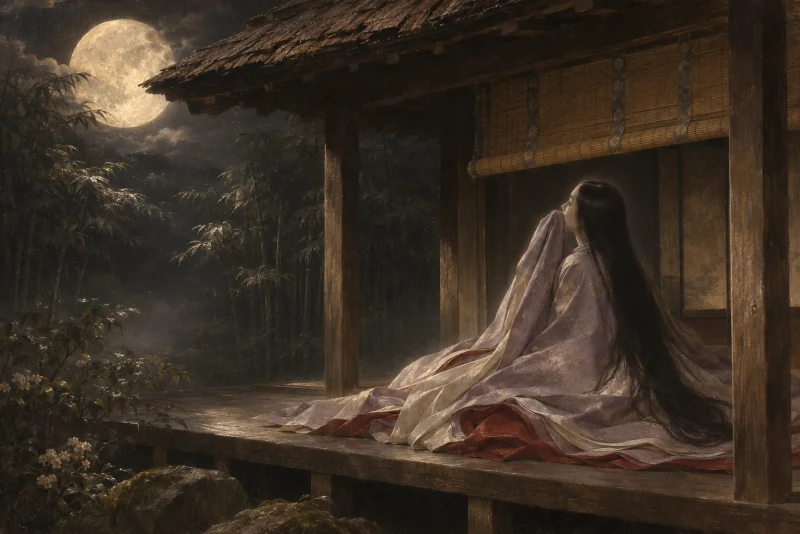
Kaguya-hime: The Princess from the Moon

A bamboo cutter finds a tiny girl in a glowing stalk, five noblemen fail at impossible quests, and the people of the moon take her home, leaving the emperor an elixir he has burned on Mount Fuji. It is Japan's oldest tale in prose, and it was not a folk tale: a learned man wrote it, and his name is lost.

Read story 11 min read
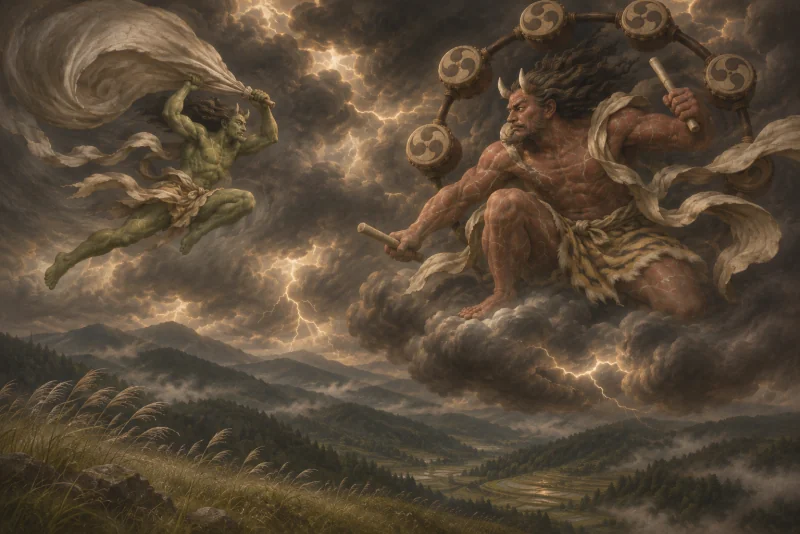
Raijin and Fūjin: Thunder and Wind

A courtier rode out with a red banner to fetch the thunder for his emperor, and caught it twice. Japan's oldest books are full of thunder and wind gods, but the pair with the ring of drums and the bag of wind came later, with Buddhist art from China.

Read story 10 min read

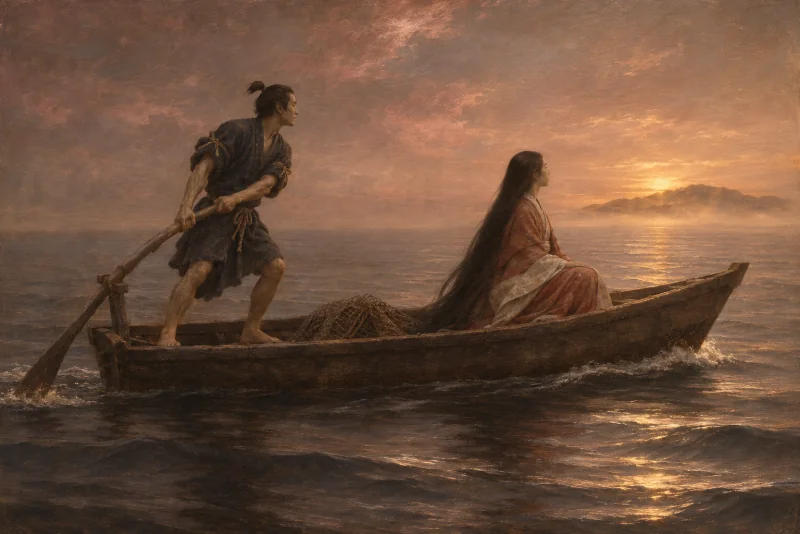
Urashima Tarō: The Fisherman Under the Sea

A fisherman catches a turtle that becomes a woman, lives three years in her land beyond the sea, and comes home to find three hundred years gone. Japan has told the story since the 8th century, but the children on the beach, the ride on the turtle's back and even the name Tarō came much later.

Read story 10 min read

Momotarō: The Peach Boy

An old woman pulls a giant peach from the river, and the boy named after it sails to the island of the oni with a dog, a monkey and a pheasant. In the oldest picture books, though, he does not come out of the peach: the old couple eat it, grow young again and have a son.

Read story 10 min read

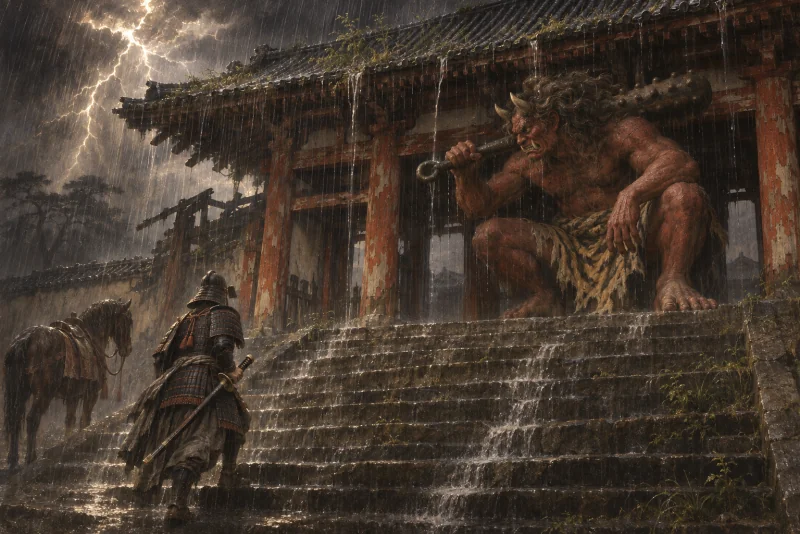
Oni: The Ogres of Japan

Horned, wrapped in tiger skin and armed with an iron club, the oni is the ogre Japan drives out with beans every year. Yet the oldest oni has one eye and no description, the word may once have meant something hidden, and in some villages the oni at the door is a god.

Read story 12 min read

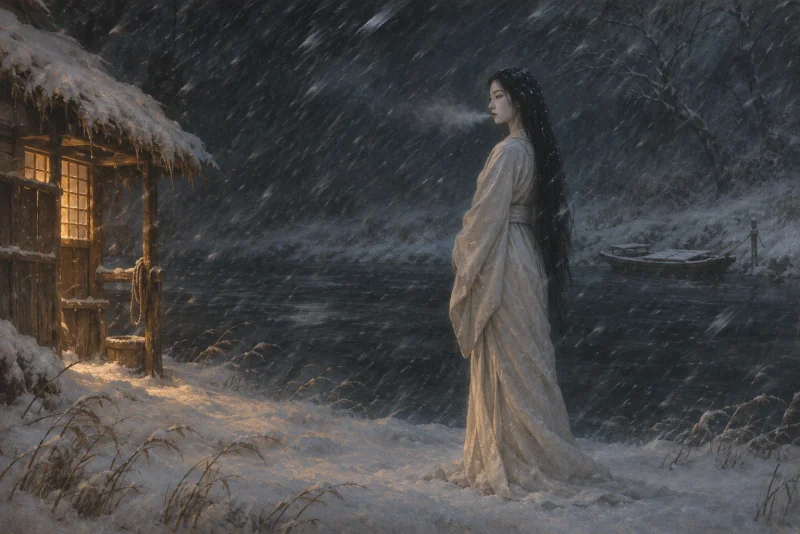
Yuki-onna: The Snow Woman

A woman in white breathes death on an old woodcutter and spares the young one, on one condition. Japan's most famous snow-woman story was first printed in English, by Lafcadio Hearn in 1904; the snow woman herself is much older, and much stranger.

Read story 10 min read

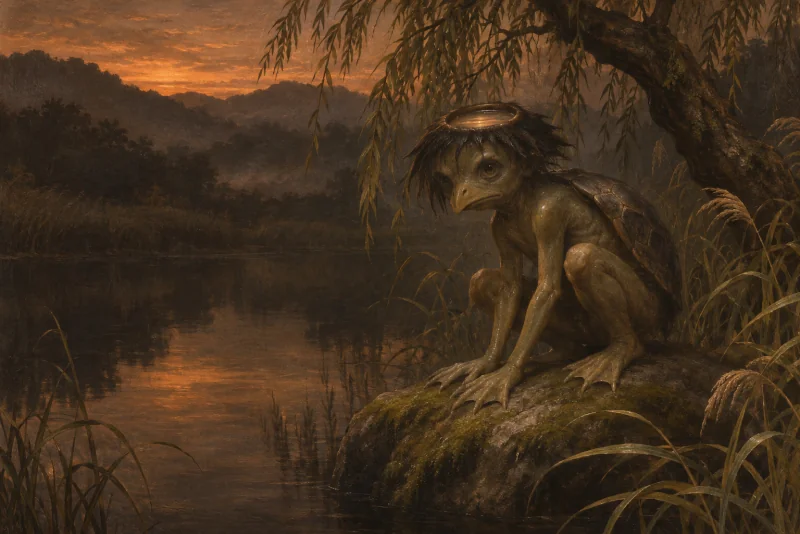
Kappa: The River Imp

A creature the size of a child, with a hollow of water on its head, waits in the river for horses and swimmers, yet a polite bow can drain its strength. Japan's best-known water spirit has dozens of local names, and an encyclopedia of 1712 draws it as a hairy, upright figure like an ape, not a turtle.

Read story 13 min read

Kitsune: The Fox in Japanese Folklore

A man of Mino married a woman who turned out to be a fox, and asked her to keep coming to sleep with him: that, says a book of about 822, is why the fox is called kitsune. Over the next thousand years the Japanese fox became a trickster, a wife, a messenger of the god Inari and, for some families, a stigma that lasted into modern times.

Read story 11 min read

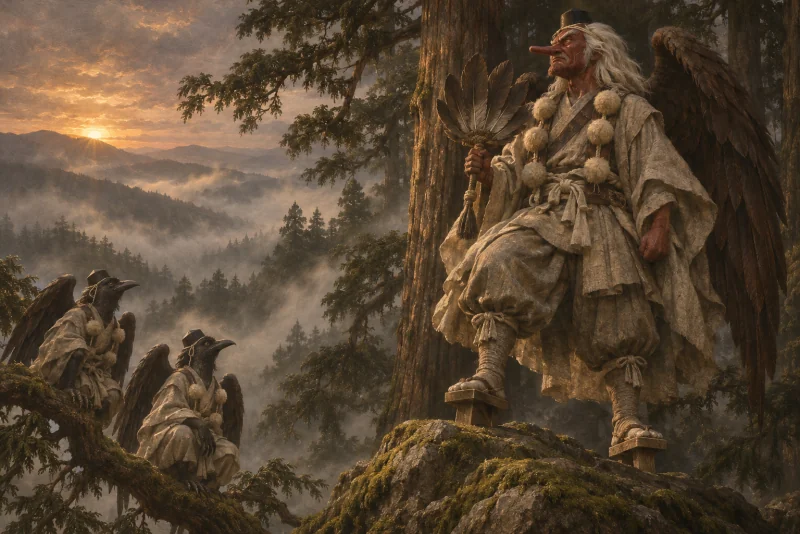
Tengu: The Goblins of the Mountains

In 637 a monk told the Japanese court that a roaring star was no meteor but a tengu, a "heavenly dog". Over the next thousand years the tengu became a kite that fooled the pious, the fallen soul of a proud monk, a mountain spirit that carried children away, and at last the red-faced, long-nosed figure still honoured on Kurama and Takao.

Read story 13 min read