Lamassu: The Winged Bulls at the Palace Gates
Before it was a stone giant at an Assyrian gate, a lamassu was a spirit that walked beside a person, and could walk away. The kings carved it with five legs, so that it stands from the front and strides from the side, and their inscriptions say what it was there to do.
- Type: belief and monument: protective spirits, and the colossal figures that guarded Assyrian gates
- Culture: Mesopotamia; the gate colossi are Assyrian, from the 9th to the 7th century BCE
- Earliest texts: the lamassu as a personal protective spirit in Old Assyrian and Old Babylonian texts (early 2nd millennium BCE); the stone guardians in the building inscriptions of Ashurnasirpal II, Sargon II, Sennacherib and Esarhaddon
- Key figures: the lamassu and the shedu; the goddess Lama; the kings Ashurnasirpal II, Sargon II, Sennacherib and Esarhaddon; the excavators Paul-Émile Botta, Austen Henry Layard and Victor Place
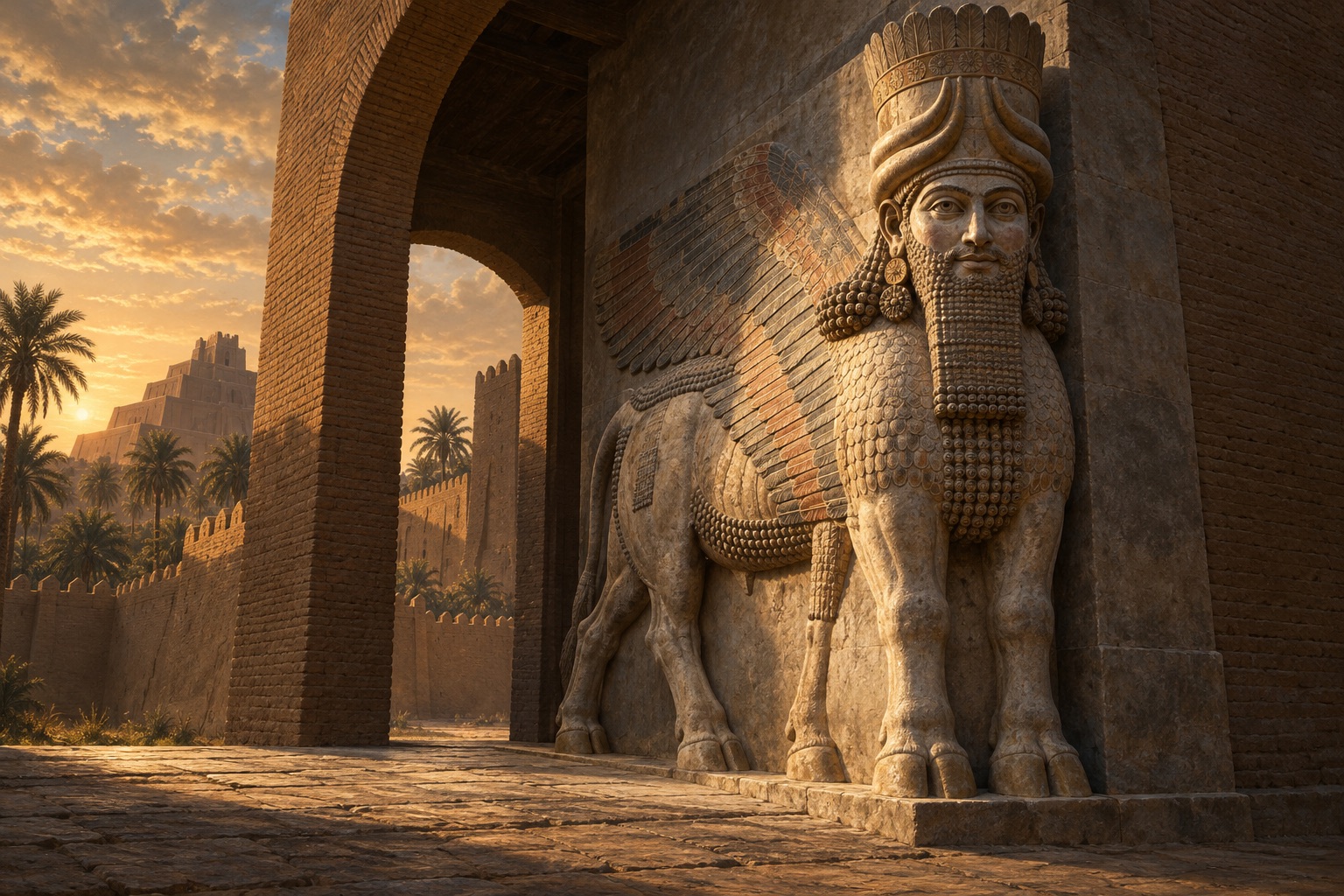
At the great doorways of the Assyrian palaces stood pairs of stone giants: bulls or lions with eagle’s wings, a bearded human face and a crown of horns, more than four metres tall. Modern books call them lamassu. To the people who carved them the word meant something smaller and closer: a protective spirit that walked at a person’s side.
Is a lamassu a god, a monster or a statue? First of all a spirit. The Chicago Assyrian Dictionary defines lamassu as a feminine noun meaning “protective spirit”, one that looked after the good fortune, spiritual health and physical appearance “of human beings, temples, cities and countries”. Only later did the word, with its partner shedu, name the stone colossi at the gates. The Louvre calls them “benevolent creatures, as you can see from their gentle smile”. No text we have read treats them as monsters.
1 The Telling
There is no myth of the lamassu: no tale in which one is born, fights or dies. What the texts give instead is a belief, that a person, a house, a temple or a city could have a protective spirit, and that such a spirit could be set in stone at a door. This section follows that belief from the person to the gate, in the words of incantations, a poem, royal inscriptions and letters.
1-1 A Spirit at Your Side
In the oldest texts the lamassu belongs to a person. Old Babylonian letters wish the reader a protective spirit; an omen promises that “the king will have a protective spirit”, which the dictionary glosses “be lucky”; a woman of the period was named Lamassani, “Our Protective Spirit”. Its companion, the shedu (Akkadian šēdu), is defined as “a spirit or demon representing the individual’s vital force”.
In Sumerian the name is written with the sign for a god and read Lama or Lamma (the dictionary warns that the reading is uncertain), and Lama was a goddess. A stela from Uruk, dedicated “for the life” of the Kassite king Nazi-Maruttash (1307–1282 BCE), shows her in a horned headdress, her hands raised before her face in prayer. The French Ministry of Culture calls her “an intermediary between humans and higher-ranking gods and goddesses”. The dictionary adds that the lamassu “is always represented as a female figure”.
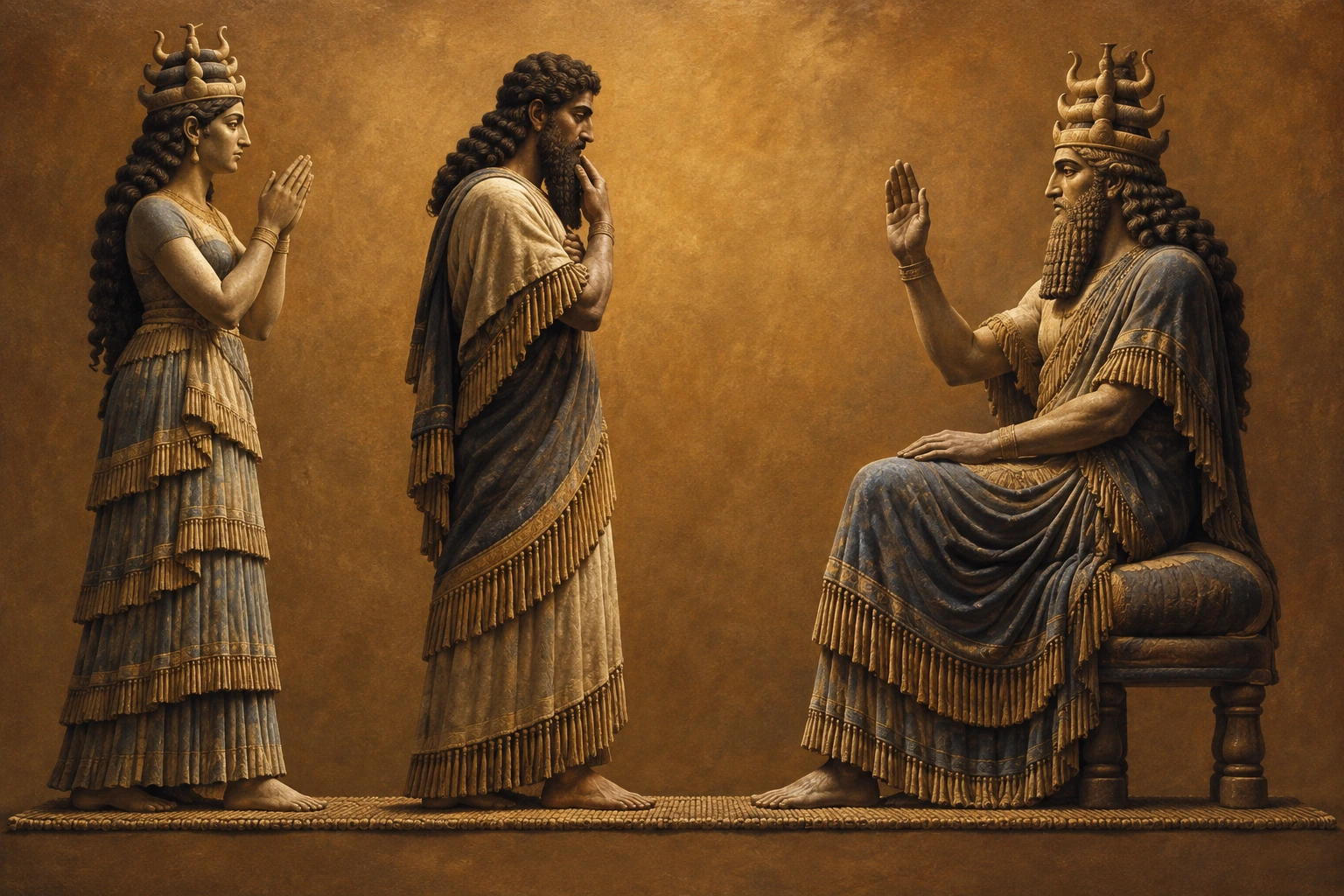
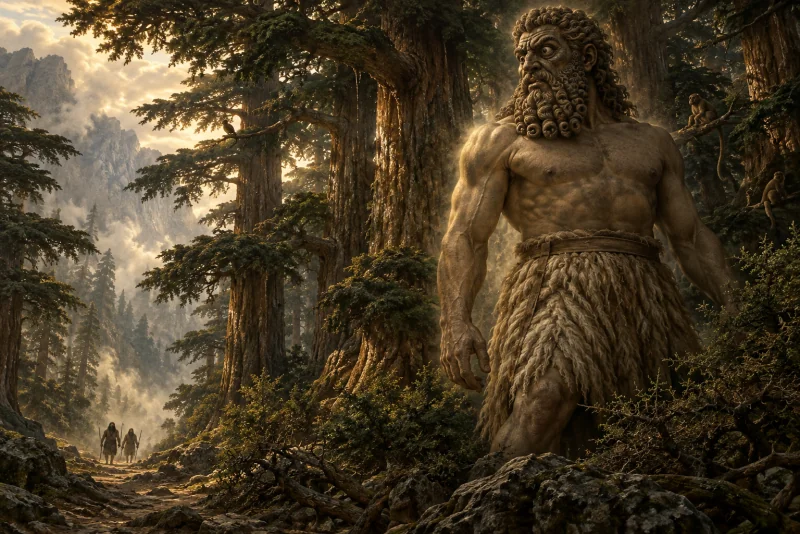
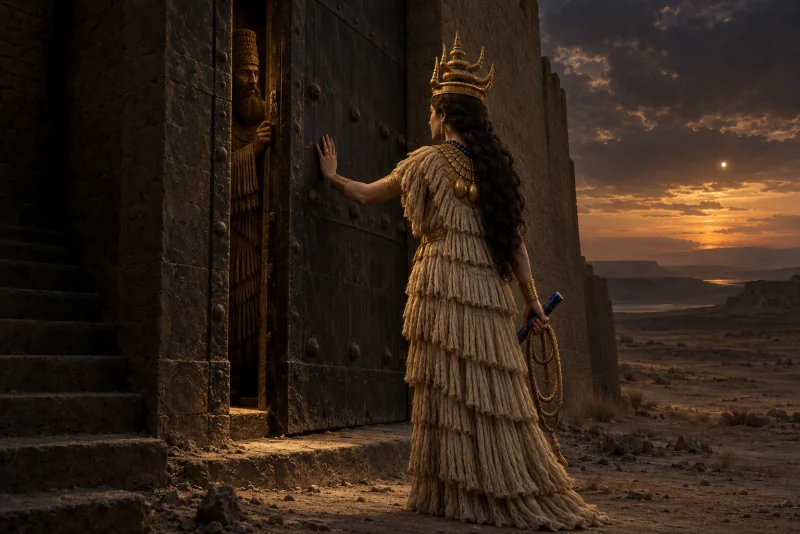
Such a spirit could leave. In the Babylonian poem Ludlul bēl nēmeqi, “I will praise the lord of wisdom”, the sufferer complains that his protective spirit “shied away (from me) to search for somebody else” (tablet I, line 46, in the dictionary’s citation of W. G. Lambert’s edition). At the end of the poem he walks through twelve gates in or near Marduk’s temple Esagila in Babylon, and at each one, Alan Lenzi writes, he “is granted something positive”. At the gate that bears the lamassu’s name, “my protective spirit joined me (again)”.
1-2 On the Right, On the Left
The incantation series Utukkū lemnūtu, “Evil Spirits”, puts the pair on either side of the exorcist. In R. Campbell Thompson’s translation of 1903: “A kindly Guardian marcheth on my right, / A kindly Spirit marcheth on my left”. In the Akkadian the guardian on the right is the šēdu and the spirit on the left the lamassu (tablet III; CT 16, plate 3, lines 93–94, as the dictionary cites them). Then the evil ones are sent away: “Into my house may they not enter, / My fence may they not break through”.
The doorway was where good spirits came in and bad ones were kept out. One ritual text says to write on the side of a protective figurine: “this is the one who makes the favorable šēdu-spirit and the favorable lamassu-spirit come in”.
1-3 Set in Stone at the Gate
The Assyrian kings gave the same pair a body of stone. Esarhaddon (r. 680–669 BCE) writes on a prism from Nineveh: “I had stone šēdus and lamassus, whose appearance repels evil, placed to the right and the left of their gate(s) as protectors of the walk (and) guardians of the path of the king who made them.” Another of his prisms adds a wish that echoes the poem’s fear: “Let the good šēdu (and) the good lamassu, who guard my royal path (and) who make me happy, last forever and ever in that palace. May they never leave it.”
Earlier kings described the figures as beasts. The text that Ashurnasirpal II (r. 883–859 BCE) had carved across the slabs of his Northwest Palace at Nimrud speaks, in the Nimrud Project’s summary, of “stone statues of the beasts of the mountains and the seas”. On the bull now in Chicago, Sargon II (r. 721–705 BCE) says: “At their entrances, I erected animals made of white stone resembling beasts of the mountain and sea.” The ISAC museum adds that the lamassu “is probably one of these ‘animals of white stone’”.
At Nimrud, the bulls at the three doorways of Ashurnasirpal’s throne room wore small fish-skin cloaks, “a reminder of the seven sages who had lived in ancient times before the Flood, and brought knowledge to mankind”.
1-4 Standing and Walking
A gate colossus was part statue and part wall. At Khorsabad, the Louvre explains, the wings are in low relief, the body in high relief and the head fully in the round, and the figures were once painted. They were finished after they had been set up: in a passage the head looks straight ahead along the body, and where the figure lines the wall beside an entrance the head is turned at a right angle, as Virginie Danrey describes for the bulls of Nineveh.
Because it is seen both from the front and from the side, it has five legs. From the front the colossus stands still on two legs; from the side it walks on four (Louvre, ISAC). The Louvre adds that the face resembles the portraits of Sargon II, and that the two or three pairs of horns on the crown were signs of divinity.
1-5 Quarry, River and Gate
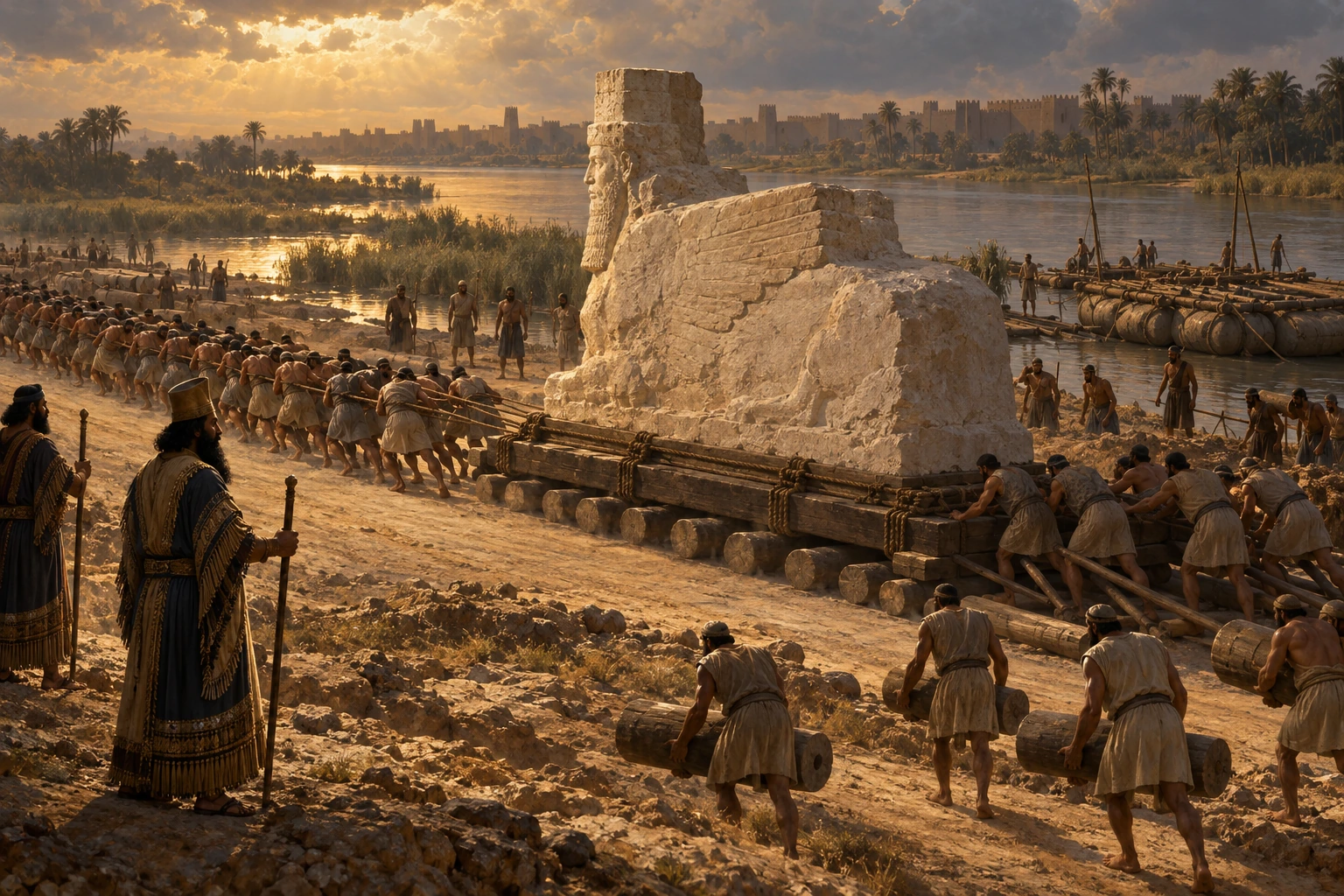
Moving them was a struggle the kings wrote about. Sennacherib (r. 704–681 BCE) had it written on one of his own bulls at Nineveh that earlier kings “quarried bull colossi of white limestone in the city Tastiate to be their (the palatial halls’) gatekeepers”, ferried them across the river in spring floods with difficulty, and “sank large boats at the quay dock”. He, by contrast, found white limestone near Nineveh at Balāṭāya and had his colossi “dragged into Nineveh”.
A letter to Sargon II from an official named Ashur-bani tells the same trouble: “Ashur-shumi-ke’in called me to help and loaded the bull colossi on the boats, but the boats could not carry the load (and sank). Now, although it cost me a great trouble, I have now hauled them up again.” The Louvre notes that reliefs at Nineveh show the blocks hauled to the Tigris on sledges by dozens of men, and floated on rafts.
2 Where the Story Is Written Down
- Incantations. The series Utukkū lemnūtu, edited and translated by R. Campbell Thompson in The Devils and Evil Spirits of Babylonia (1903). Thompson lists šēdu and lamassu among the names of spirits, and admits that of their “linguistic origin” “very little is known”.
- Ludlul bēl nēmeqi, the Babylonian poem of a righteous sufferer. Editions number its tablets and lines differently: the gate passage is at the end of the last tablet.
- The Standard Inscription of Ashurnasirpal II, 22 lines long, carved across the reliefs of the Northwest Palace. More than 400 copies are known, and over half are still at Nimrud.
- The Bull Colossi Inscription of Sargon II (RINAP 2, Sargon II 009), carved between the legs of the Khorsabad bulls. It lists Sargon’s wars, tells how he founded Dur-Sharrukin, “the fortress of Sargon”, with eight gates, and ends with a curse on “the one who alters the work of my hands”.
- The prisms of Esarhaddon from Nineveh (RINAP 4, Esarhaddon 1 and 2) and Sennacherib’s inscription on a Nineveh bull (RINAP 3, Sennacherib 46).
- Letters to Sargon II in the State Archives of Assyria: the sunken boats (SAA 1, 119), and a request to leave officials behind “to look after the bull colossi” before they crossed the river (SAA 5, 298).
3 Competing Versions
- She or he? The dictionary: the lamassu is “always represented as a female figure”, but “later texts differentiate between lamassatu ‘statue of a goddess’ and lamassu ‘statue of a god.’” The Louvre: the Assyrians called the bulls aladlammû or lamassu, “although this name is more often that of female deities”, and šēdu fits a male being better.
- What did the Assyrians call them? From Sennacherib on, the gate bulls are written with two signs, ALAD.LAMMA, read aladlammû. That reading, the dictionary says, “although not attested, seems the most plausible”; one version of Esarhaddon’s text writes “šēdus and lamassus” in its place. In the passages above, Ashurnasirpal and Sargon speak of “beasts”.
- Bull or lion? At Nimrud, Layard found human-headed winged lions as well as bulls. Sennacherib set “bull colossi and sphinxes of white limestone” to “hold the door bolts” of his palace.
- Guardian or demon? A šēdu could also be evil: an incantation lists “great šēdu, utukku, and rābiṣu demons, who chase around after people in the squares”.
- Not Lamashtu. The dictionary keeps lamassu apart from lamaštu, “a female demon”, “the daughter of Anu”, who seizes children. The names look alike; the beings are opposites.
4 History and Tradition
- Khorsabad, 1843. Paul-Émile Botta, the French consul in Mosul, began digging at Khorsabad in 1843. In 1845 his first shipment left with two winged bulls sawn into five and six pieces, floated down the Tigris on keleks, rafts buoyed by hundreds of inflated skins. The Louvre opened the first Assyrian museum on 1 May 1847.
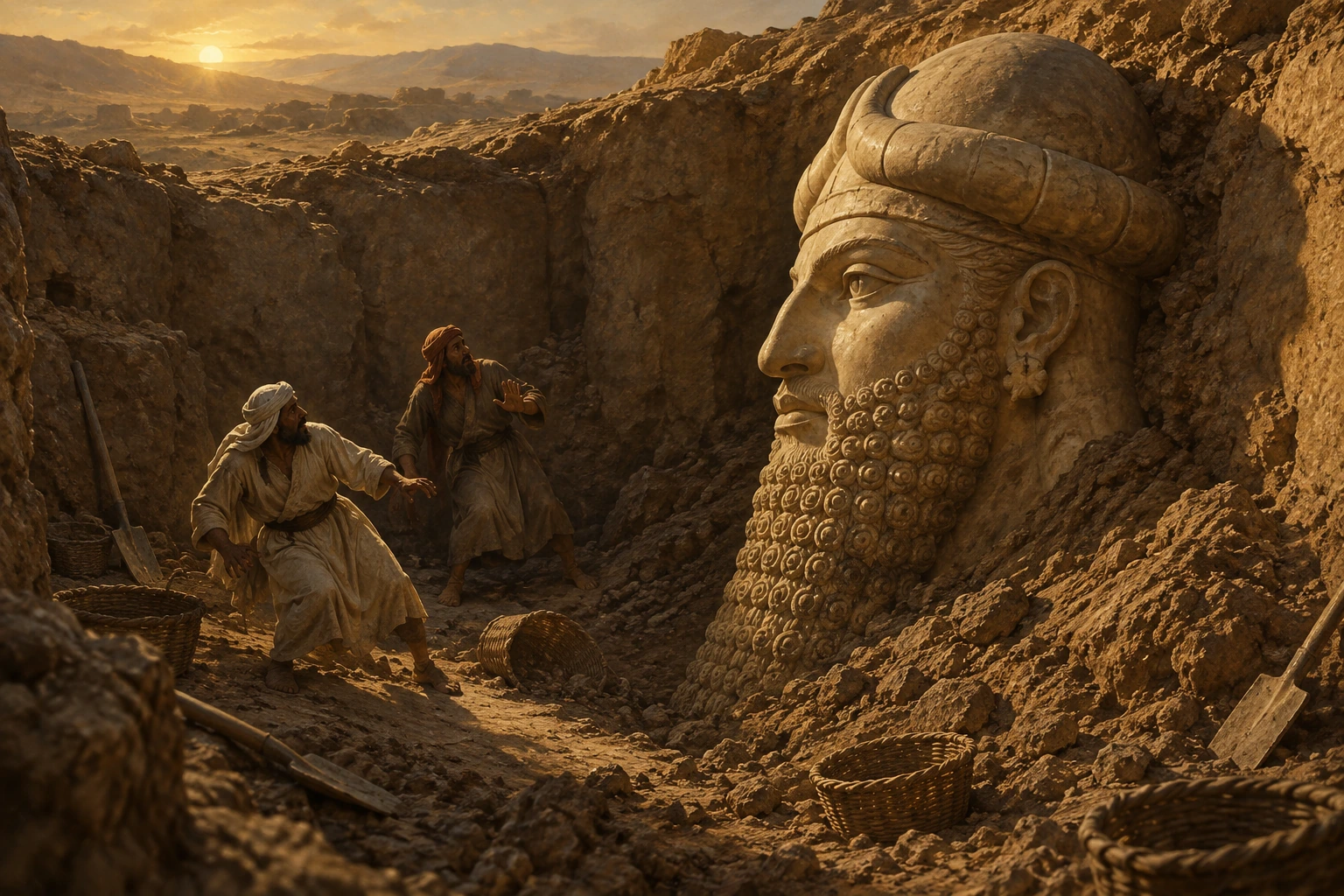
- Nimrud, 1845–1847. Layard’s workmen at Nimrud uncovered “an enormous human head sculptured in full out of the alabaster of the country”. Two riders galloped to him: “they have found Nimrod himself”. The sheikh of the local tribe went down into the trench and said: “This is not the work of men’s hands, but of those infidel giants of whom the Prophet… has said, that they were higher than the tallest date tree.”
- The Tigris, 1855. Victor Place, Botta’s successor, refused to saw his bulls and had carts and a road built to move them to the river. In 1855 his convoy was attacked and sank in the Shatt al-Arab, where the Tigris and Euphrates meet; only one winged bull of 30 tonnes reached the Louvre. Mark Goldstone, writing for the Maritime Endangered Archaeology project in 2023, identifies it as AO 19859, from city gate 3, whose pair went down with a raft, and sets the loss beside Ashur-bani’s letter.
- Chicago, 1929. The bull in the ISAC museum guarded Sargon’s throne room. It was found in 1929, broken “into more than a dozen pieces in antiquity”, given by Iraq’s Department of Antiquities, and put together inside the gallery in 1930: 16 feet tall, about 40 tons.
- More than a hundred. Danrey counts over a hundred winged human-headed bulls in the ruins of Assyria’s capitals, about forty of them from Nineveh.
- After Assyria. The Heibonsha World Encyclopedia traces such bull-men through Akkad into the art of Assyria and of Achaemenid Persia, and calls the pairs at the Assyrian palace gates their most perfect form: images of a spirit said to ward off evil and bring good fortune and plenty. Layard knew his first head at once for that of “a winged lion or bull, similar to those of Khorsabad and Persepolis”.
- 2015. In a video released on 26 February 2015, Islamic State militants cut the face off one of the bulls of the Nergal Gate at Nineveh with a power saw; Paolo Brusasco reports that all four bulls there were attacked, and that the gate was bulldozed in 2016. At Nimrud, a video released on 11 April 2015 showed a lamassu broken up with an electric drill before the Northwest Palace was blown up (The Art Newspaper). Khorsabad was looted and partly mined (Louvre). In Mosul, restorers have since been piecing together a winged lion from Nimrud and two lamassu (AFP, 2021); at Khorsabad a French and Iraqi team uncovered again, in 2023, a bull that had been reburied for safety in the 1990s; its head, cut off by smugglers in 1995, is in the Iraq Museum (Hyperallergic).
- Trafalgar Square, 2018. The artist Michael Rakowitz rebuilt the Nergal Gate lamassu for the Fourth Plinth in London, out of thousands of empty cans of Iraqi date syrup. The Invisible Enemy Should Not Exist stood there from March 2018 until March 2020.
The fifth leg is easy to take for a slip of the chisel. It is deliberate. Layard saw why in 1849: “That the spectator might have both a perfect front and side view of the figures, they were furnished with five legs; two were carved on the end of the slab to face the chamber, and three on the side.” Seen from the front, the colossus stands still; from the side, it walks.
5 Related Stories
- Adapa: The Man Who Refused the Bread of Life: the bulls of Ashurnasirpal’s throne room wore fish-skin cloaks in memory of the Seven Sages before the Flood. The Nimrud Project’s glossary gives their Akkadian name: apkallu, “sage”.
- Enuma Elish: Marduk Splits Tiamat to Make the World: among Marduk’s fifty names, Asalluhi is the one “who according to his very name is the protective spirit of god and country” (tablet VI, line 149, as the Chicago Assyrian Dictionary translates it). The word there is lamassu.
- Gilgamesh: The King Who Tried to Escape Death: the throne-room façade at Khorsabad, guarded by bulls, also had a hero over five metres tall choking a lion. The Louvre notes that he “has sometimes been identified with Gilgamesh”.
- Humbaba: The Guardian of the Cedar Forest: another guardian set in place by the gods, over a forest rather than a gate. We have not found a scholar who compares the two; we link them for the theme.
- The Great Sphinx: The Lion of Giza and Its Legends: Sennacherib writes of “bull colossi and sphinxes of white limestone”, and the Heibonsha World Encyclopedia’s entry on the sphinx names the lamassu as another of the winged beasts of the ancient Near East. We link them as guardians with human faces, a shared theme.
6 Sources
- Utukkū lemnūtu, tablet III, in R. Campbell Thompson, The Devils and Evil Spirits of Babylonia, vol. I (Luzac, 1903): archive.org
- Royal inscriptions, ORACC: Sargon II 009, ed. Grant Frame (RINAP 2); Sennacherib 046, ed. A. Kirk Grayson and Jamie Novotny (RINAP 3); Esarhaddon 001 and 002, ed. Erle Leichty (RINAP 4): Sargon II 009, Sennacherib 046, Esarhaddon 001, Esarhaddon 002
- Letters to Sargon II, SAA 1, 119, after Simo Parpola (1987), and SAA 5, 298, after Giovanni B. Lanfranchi and Simo Parpola (1990): ORACC, ORACC
- The Assyrian Dictionary of the Oriental Institute of the University of Chicago, vol. L (1973), “lamassu” and “lamaštu”; vol. A/1 (1964), “aladlammû”; vol. Š/2 (1992), “šēdu A”: ISAC, ISAC, ISAC
- Alan Lenzi, “Scribal Hermeneutics and the Twelve Gates of Ludlul bēl nēmeqi”, JAOS 135.4 (2015): Lockwood
- Austen Henry Layard, Nineveh and Its Remains, vol. I (New York, 1849), chapter III: archive.org
- Louvre: winged bull AO 19859; “The Palace of Sargon II”; Taureaux ailés, teaching dossier (2018): collections.louvre.fr, louvre.fr, louvre.fr
- ISAC Museum, the Khorsabad lamassu: isac-idb.uchicago.edu
- French Ministry of Culture, “Transporting the remains” (Khorsabad) and “Stela of the protective goddess Lama”: culture.gouv.fr, culture.gouv.fr
- Nimrud Project, ORACC: “Assurnasirpal’s Northwest Palace”, “The Standard Inscription”, “On and in the mound of Nimrud”: ORACC, ORACC, ORACC
- Virginie Danrey, “Winged Human-Headed Bulls of Nineveh: Genesis of an Iconographic Motif”, Iraq 66 (2004), abstract; Paolo Brusasco, “The Assyrian Sculptures from the Nergal Gate Museum at Nineveh before the Islamic State’s Attack”, JAOS 138.3 (2018): Cambridge, Lockwood; Mark Goldstone, “Lost in the Tigris: The Al Qurnah Disaster Revisited”, MarEA, 2023: University of Southampton
- News: Martin Bailey, The Art Newspaper, 13 April 2015; “Iraqi museum restores treasures destroyed by jihadists”, AFP, 21 December 2021; Elaine Velie, Hyperallergic, 30 October 2023; “Trafalgar Square Fourth Plinth sculpture unveiled”, PA, 28 March 2018: theartnewspaper.com, hurriyetdailynews.com, hyperallergic.com, irishnews.com
- “ラマッス” (Heibonsha World Encyclopedia, old edition, from the entry “人面獣身像”); “コルサバード” and “ニムルド” (Heibonsha World Encyclopedia, revised edition, and Nipponica): Kotobank, Kotobank, Kotobank
Cover and illustrations: AI-generated images made for Arcana. They are interpretations, not historical artworks.